












PTSD and Chronic Pain: Is There a Link?

Learn more about the link between PTSD and chronic pain, how they influence each other, and some natural treatments for both.
 Drowning in Chronic Pain
June 2022. This article is independently written by Shelby Golding. All opinions given are hers. Shelby has been certified as a personal trainer and nutritional specialist since 2007. In 2008, she found her passion for writing about these topics and hasn’t looked back.

 Drowning in Chronic Pain

In the recent quest to identify causes and treatments for people with chronic pain, the connection between pain and PTSD was unearthed. Among those who have PTSD, almost 80% experience chronic pain symptoms. Meanwhile, about 15% to 30% of people with chronic pain also exhibit signs of PTSD.
 
These two disorders can be comorbid, a medical term that denotes two or more diseases simultaneously present in a patient. In the case of chronic pain and PTSD, each condition worsens the symptoms of the other, leaving many people struggling to maintain their quality of life and delaying their return to health.
 
Studies have found a clear link between chronic pain and PTSD. Keep reading to learn the specifics of that connection and natural treatments to lessen symptoms.

What Triggers the PTSD & Chronic Pain Connection?

When someone has comorbid chronic pain and PTSD, the symptoms for both are more severe than in people with only one condition. They are also more likely to have a disability or anxiety, depression, or opioid abuse disorders.
 
Since the connection between the two diseases has emerged, experts have been exploring why these two conditions seem to trigger each other.
After a traumatic event, the brain automatically imprints the memory into the amygdala. The amygdala remembers emotions and gets triggered when we are threatened or overwhelmed.
Your brain has an incontestable memory for trauma. It wants to ensure that you never end up in that situation again. So it constructs a constant reminder to avoid anything associated with the trauma in the future.
 
These triggers might manifest as physical pain, which serves as a constant reminder of the traumatic event. Or they might manifest as psychological pain that affects physical health over time, causing tight muscles, insomnia, stress, and other symptoms. Survivors of physical, psychological, or sexual abuse are more likely to develop chronic pain at some point in their lives.
 
Studies have found that people with anxiety disorder are more likely to develop chronic pain and PTSD together. Anxiety disorder is a psychological response caused by a physical health problem that leads to panic in situations that may seem trivial to someone else.
 
Other vulnerabilities that often result from trauma and cause comorbidity between PTSD and chronic pain include hypervigilance, avoidance behavior, autonomic dysfunction, and muscle pain.

A Symbiotic Relationship

Not only do these two conditions often arrive together, but they tend to worsen each other as well. Over time, they feed off one another, causing a seemingly never-ending loop of pain and psychological stress. This is called the Mutual Maintenance Model (MMM) in the medical community.
 
The MMM suggests that a person learns to focus on certain internal and external stimuli, giving more attention to those that may pose a threat or cause pain. As a result, they begin to expect the worst out of every situation, more so than a person with only one of the conditions.
The brain recreates neural pathways to help a person cope, but in the process, it creates unhealthy patterns. Coping strategies like avoidance, depression, and fatigue- and these strategies inevitably worsen symptoms of both PTSD and chronic pain.
In addition, the constant flood of stress hormones associated with PTSD and chronic pain can cause the amygdala to hijack where your body responds to psychological stress the same way it would a physical threat.

 
The constant cycle of psychological triggers causing physical pain and intensifying poor mental health is one that many find hard to break.

How to Treat PTSD/Chronic Pain

Many try to treat the symptoms of PTSD and chronic pain to restore quality of life. However, this leaves the underlying cause untreated.
 
Opioids used to be a standard treatment for people with chronic pain until studies revealed that people with musculoskeletal pain and PTSD are more likely to have OUD (Opioid Use Disorder). To prevent addiction and reduce the possibility of overdose, patients with a comorbidity of PTSD and chronic pain need to look elsewhere for relief.
 
Another possible roadblock in treating comorbid PTSD and chronic pain is strategizing on how to treat both simultaneously. Working with two separate practitioners, each treating one of the conditions, often leads to a disconnect and lack of progress. Treating one before the other probably won’t work since they exacerbate each other and may cause worsening symptoms when you should be getting better.
 
To be successful, the integrated multidisciplinary model is the only real option. In this model, two or more practitioners work together to treat the issues simultaneously.

Common PTSD & Chronic Pain Treatments

Common PTSD & Chronic Pain Treatments

A few common treatments proven to help with both conditions are psychotherapy, mindfulness/meditation, and acupuncture.
 
Psychotherapy is found to be the single most effective way to treat comorbid PTSD and chronic pain. It allows the person to avoid unhealthy coping strategies and participate more fully in the present moment. For example, a psychologist might walk you through specific approaches, such as cognitive-behavioral therapy (CBT) or eye movement desensitization and reprocessing (EMDR), to help the person readapt unhealthy coping strategies.
 
Mindfulness/meditation is an exercise in non-judgemental awareness. The participant learns to identify their triggers and associated physical sensations, emotions, and mental states that may precede a negative reaction. Regular meditation has also been proven to reduce pain, anxiety, stress, and depression. So while meditation isn’t a cure for PTSD, it has been linked to improved symptoms since it calms the fight-or-flight response.
 
Acupuncture as trauma therapy is still undergoing investigation. However, anecdotal evidence suggests it is an effective treatment for anxiety, sleep problems, depression, stress, and chronic pain. The practitioner can relieve some of the strain on the body and mind that often accompanies long-term physical pain and illness by treating the symptoms.
 
Be sure to consult with your primary care practitioner before changing your current treatment plan or adding anything to it.

Is There a Link?

A definitive link has been found between PTSD and chronic pain, but what does that mean for you? The best way to treat comorbid conditions is still being investigated, but studies suggest that working on both conditions simultaneously is the only way to achieve lasting results. An integrative approach involves a lot of communication between you and your providers.
If you’re dealing with chronic pain right now, apply your Kailo pain patch near the site of pain – Kailo is designed to provide pain relief in seconds. A recent clinical study showed that patients reported a significant increase in quality of life when switching to Kailo from oral medication.
 
Disclaimer: Kailo should not be used if you have a pacemaker or if you are pregnant. Always consult your doctor or health care professional before using Kailo.

Still thinking it over?

You made it to the bottom. Let's make this decision easy.

If creams, pills and braces keep fading by lunch, Kailo 2.0 is built differently.

Kailo 2.0 is a drug-free patch you wear 24/7, built on a patented technology designed to work with your body's own electrical signals. That underlying technology has been through a randomized, placebo-controlled clinical trial.

90days

Lasts up to 90 days of continuous 24/7 wear. Night and day, from one patch. That works out to about $33 a month.

Kailo 2.0 is on sale right now for $99 (regular price $129). Every order includes a free 20-minute placement consultation with a specialist and a 30-day money-back guarantee, so the only thing left to find out is whether it works for you.

Most people who place it well feel something within a few minutes.

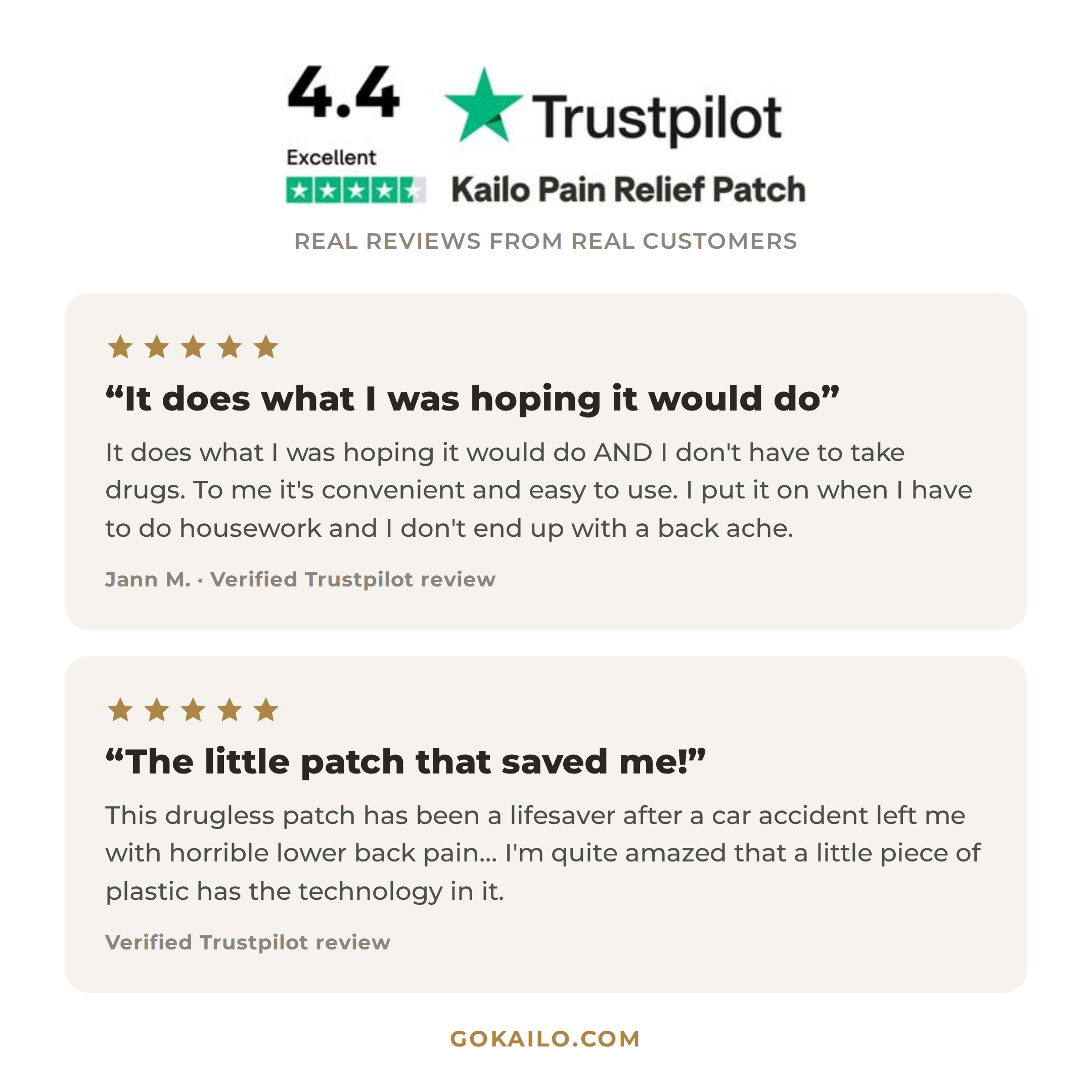
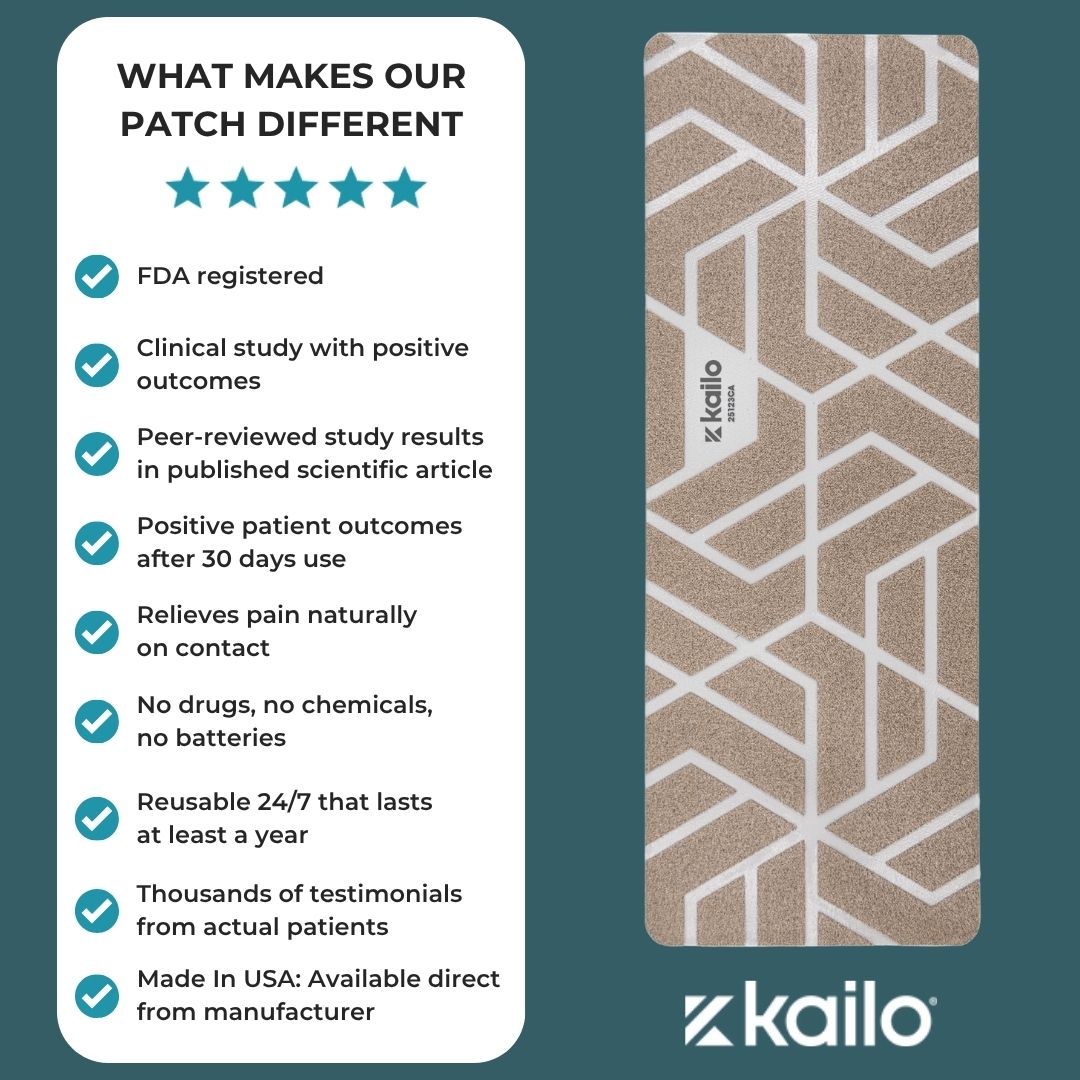
What makes the Kailo 2.0 patch different: a checklist including FDA registered, clinical study with positive outcomes, peer-reviewed study results, no drugs, no chemicals, no batteries, made in the USA Kailo Pain Relief Patch rated 4.4 out of 5 on Trustpilot, with two verified five-star customer reviews Free US shipping over $49, 30-day money-back guarantee, fast delivery from USA
1M+patches shipped
4.4Trustpilot rating
50,000+repeat customers
On sale now $129 $99 Save $30

Pay over time with Affirm, Afterpay or Klarna: as low as $18/month, or choose an interest-free plan at $25/month.

Try Kailo 2.0 Risk-Free for 30 Days →

30-day money-back guarantee · Free US shipping over $49 · Made in the USA

Financing options through Affirm, Afterpay and Klarna are subject to eligibility and each provider's terms. Customer experiences are individual and not typical or guaranteed. Kailo is not a cure and is meant to be used alongside your regular care. Individual results vary.

RETURN POLICY

TRUST KAILO

Returns

We hope you will be happy with your purchase. If for any reason you are not satisfied, we hope to make it right. Please review our return policy below, select a preferred method of contact and we’ll do our very best to accommodate your return.

Reducing pain is your first priority and it is also ours. We have designed our return policy to promote that.


These are our return policy best practices:

  • Take all of the time offered in our return policy to allow you time to find the right placement for your patch.
  • Simply contacting us before the return policy window is over and getting started on the steps gives you access to a full return.
  • If your purchase included any “Free” patches, you must return the free patches to receive reimbursement for the paid patches.
  • We offer returns on gifted products. An order number will be required to process a return. Gift recipients are not entitled to the refund.
  • If you send products to us for a refund and you haven’t followed the return policy steps, we will not ship the products back to you.
  • We offer return shipping labels for domestic purchases of The Element Patch only. All other products must be returned at the customers’ expense.


RETURN POLICY STEPS

First Step: Contact our customer service team at support@gokailo.com and let them know that you’d like to return your products.

Second Step: Our customer service team member will ask you some questions about your efforts to reduce pain using our patches. Please work with us through this process because we want to give you the best opportunity possible to eliminate your pain. They will ask you:

  1. Have you seen our placement videos that give you ideas of where to place the patch for your specific pain?
    CLICK HERE TO SEE THE PLACEMENT VIDEOS
  2. Have you scheduled a 20 minute video call with our placement concierge service because sometimes it requires a demonstration to get the correct placement?
    CLICK HERE TO SEE THE CONCIERGE APPOINTMENT SCHEDULE

Third Step: Our customer service team will send you a return authorization form. If you are returning The Element patch and live in the U.S., our customer service team will also provide you a prepaid envelope to return the product.


Fourth Step: Mail your product(s) to the address on the return authorization form within 2 weeks from the time we email you the return authorization form. See the detail below about return policy lengths by product and what should be returned.


Fifth Step: Our returns team will receive your return, compare it to what you purchased, and refund you according to what you returned. Once returned products are received, refunds are issued within 3-5 business days to the credit card that was used to make the purchase.


THE FLEX PAIN PATCH

Return Policy Length: Contact Us Within 30 days
Subscriptions are not eligible for returns


What should be returned:

  • The Flex Pain patch
  • Do not return the packaging
  • Do not return any of the 5 free adhesives that came with the patch


THE KAILO PAIN PATCH

Return Policy Length: Contact Us Within 90 days
Subscriptions are not eligible for returns


What should be returned:

    • The Kailo Pain patch
    • Do not return the packaging
    • Do not return any of the 3 free adhesives that came with the patch
    • Do not return the felt protective pocket


KAILO ADHESIVE 10-PACKS

Return Policy Length: Contact Us Within 90 Days
Subscriptions are not eligible for returns


What should be returned:

    • As many adhesives as you have remaining. You will be refunded for Adhesives that are unused and undamaged.


EXTRA STRENGTH ADHESIVE 10-PACKS

Return Policy Length: Contact Us Within 90 Days
Subscriptions are not eligible for returns


What should be returned:

    • As many adhesives as you have remaining. You will be refunded for Adhesives that are unused and undamaged.


FLEX ADHESIVE 5-PACKS

Return Policy Length: Contact Us Within 30 Days
Subscriptions are not eligible for returns


What should be returned:

  • As many adhesives as you have remaining. You will be refunded for Adhesives that are unused and undamaged.


KT-TAPE ADHESIVES

Return Policy Length: Contact Us Within 90 Days
Subscriptions are not eligible for returns


What should be returned:

    • Any package of KT-tape that is unopened, unused, and not purchased through a subscription or part of an Element kit can be returned for a full refund.


KAILO COHESIVE BANDAGE

Return Policy Length: Contact Us Within 90 Days
Subscriptions are not eligible for returns


What should be returned:

    • Any package of Kailo Cohesive tape that is unopened, unused, and not purchased through a subscription or part of an Element kit can be returned for a full refund.


THE KAILO ARMBAND

Return/Exchange Policy Length: Contact Us Within 30 days


What should be returned:

  • The Kailo Armband
  • Do not return the packaging
  • We offer one size exchange for the Armband if needed


NEED ASSISTANCE?

Please email us at the link below and include your name and order number for questions about a previous purchase.

support@gokailo.com

GET IN TOUCH

Kailo is far more than just a business for us. If you need to reach us for any reason, please email support@gokailo.com. A live agent can answer questions about our company, our products, placement help for your specific pain, and order-and-return information.

0